Sponsored article
Why the Tissue Composition of Pork Lip Determines Its Value in Meat Processing
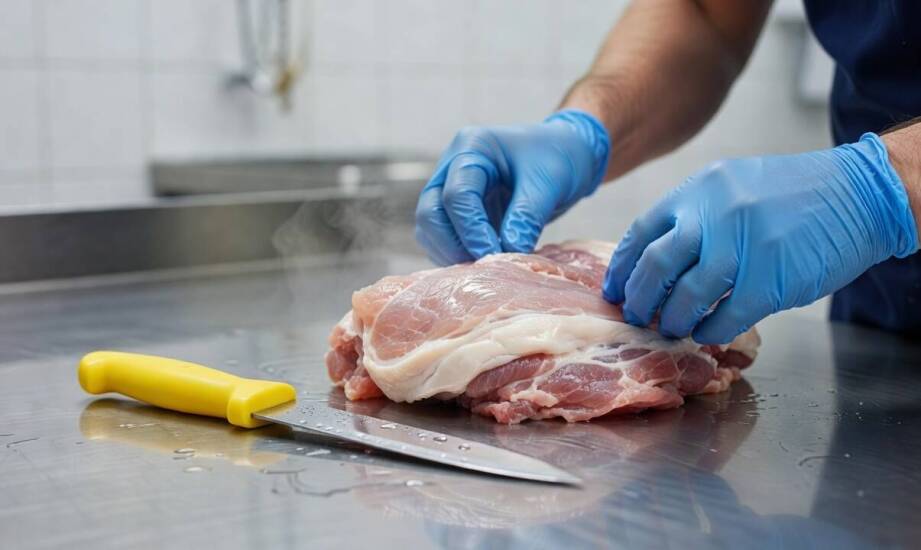
Pork lip is a raw material whose suitability for meat processing depends not only on its anatomical origin but, above all, on the proportions of individual tissues. The ratio of muscle, fat and connective tissue affects how the raw material behaves during comminution, mixing and heat treatment. For industrial customers, consistency between successive batches and compliance with the agreed specification are therefore particularly important.
Read more: What Are the Most Commonly Chosen Varieties of Mushrooms by Wholesale Buyers?
How Does Tissue Composition Affect the Use of Pork Lip?
Pork lip contains tissues with different processing properties, so it should not be assessed solely on the basis of its commercial name. The proportions of individual tissues determine how the raw material behaves during processing, affecting, among other things, its structure after comminution and its response to heat.
Read more: The impact of innovative solutions on the ergonomics of coffee roasting equipment
When purchasing pork lip, the preparation of the cut and the parameters agreed between the supplier and the customer are therefore important.
Read more: Home Smoking in the Garden—How to Utilize the Potential of Outdoor Space?
Batches with clearly different proportions of fat or connective tissue may require adjustments to the recipe or processing conditions. In serial production, limiting such differences is particularly important because it makes it easier to maintain comparable properties of the meat mixture and the finished product.
Why Does Connective Tissue Matter During Processing?
Connective tissue contains collagen, whose structure changes under appropriately controlled heat treatment. Its proportion can therefore affect the consistency and texture of the product, although the final result depends on the complete recipe and the technology used.
Collagen content should be considered together with the processing method, because a high proportion alone does not determine the desired characteristics of the finished product.
Michna Meat supplies pork cuts for professional customers, including pork lip. In B2B deliveries, the possibility of agreeing raw material characteristics suitable for its intended use is particularly important.
When planning production, the delivery specification should therefore be considered together with the requirements for comminution, mixing and heat treatment.
How Does Fat Affect the Processing Value of the Raw Material?
Fat is an important component of many meat products because it affects structure, perceived juiciness and the sensory characteristics of the finished product. Its proportion, however, should result from the recipe rather than from accidental variation in the supplied raw material.
Consistent fat content makes production standardisation easier, particularly when pork lip is one of several raw materials used in the same meat mixture.
If a new batch contains different proportions of individual tissues, the overall balance of the recipe also changes. In industrial processing, it is therefore worth controlling not only the weight of the delivery but also the preparation of the cuts and their compliance with technological requirements.
This helps reduce the need to compensate for differences later by changing the proportions of other ingredients.
What Determines Consistency Between Successive Deliveries?
In B2B trade, it is important to define the criteria according to which the raw material will be accepted and approved for production.
The specification should describe the characteristics that matter to the customer, rather than being limited to the name of the cut itself.
Depending on the intended application, these may include requirements concerning preparation, the proportions of particular tissues, product form, packaging and delivery conditions.
Batch traceability and appropriate storage conditions also remain important. Raw material of biological origin naturally varies, so differences cannot be eliminated completely. Their impact can, however, be reduced through clearly defined purchasing requirements, incoming inspection and standardised processing procedures.
Processing Value Depends on Controlled Composition
The suitability of pork lip for meat processing depends on the actual proportions of muscle, fat and connective tissue, as well as on the way the raw material is subsequently used.
Understanding these parameters makes it easier to match the raw material to the recipe and processing conditions.
In industrial production, consistency between deliveries is particularly important because it reduces the need to adjust the process for every new batch.
FAQ
Does Pork Lip Contain Connective Tissue?
Yes. Pork lip contains connective tissue as well as muscle and fat tissue. Their proportions affect the processing properties of the raw material and how it behaves during further production.
Can the Fat Content of Pork Lip Affect the Recipe?
Yes. The proportion of fat in individual raw materials affects the total fat content of the meat mixture.
When producing consistent products, it is therefore important to control the composition of successive batches.
Why Is the Commercial Name of the Raw Material Not Enough in B2B Trade?
The commercial name identifies the type of cut but does not describe all characteristics relevant to a specific production process.
For this reason, B2B transactions should also be based on an agreed raw material specification.
You might be interested
What Are the Most Commonly Chosen Varieties of Mushrooms by Wholesale Buyers?

Comparison of materials used in cassock production: durability and comfort

The Role of the Digital Services Act in Their Regulation
